

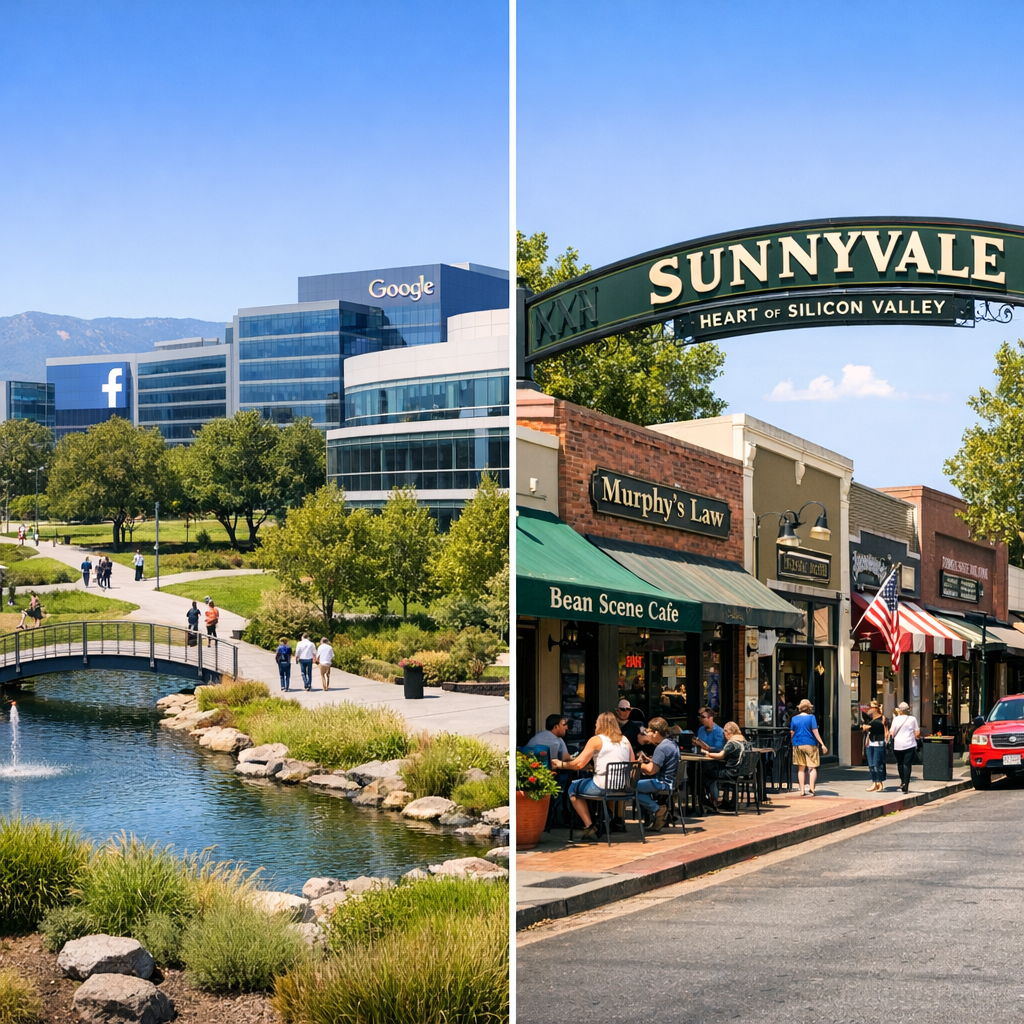
Sunnyvale’s economy continues to evolve in ways that matter for entrepreneurs, job-seekers, and residents alike. From major expansions in High Tech to renewed momentum in small business support and real estate adaptations, several ongoing trends are reshaping the local business and employment landscape.
What’s fueling growth in tech and innovation
The city remains deeply anchored in technology, innovation, and R&D. Some of the region’s highest employment share sits in professional, scientific, and technical services. This reflects Sunnyvale’s strong identity as a hub for information and high tech industries. These sectors contribute significantly to job creation — both in large employers and through growing startups. Economic development plans continue to emphasize these strengths, while also supporting manufacturing and research as cornerstones of the local economy. (Sunnyvale & county employment data)
Large employers and the space they need
Companies like Google, Apple, Intuitive Surgical, Synopsys, and others are among the top private employers in Sunnyvale. These tech, medical device, and engineering firms are investing in new campuses, office buildings, and labs. That drives demand for modern commercial space — medium-rise towers and updated industrial campuses are replacing older parks. This expansion helps create construction and professional service jobs, even if it adds pressure on zoning, infrastructure, and neighboring communities.
Small businesses and entrepreneurship: growing support
While large firms dominate headlines, small businesses are in all corners of Sunnyvale. The city now counts nearly 7,000 local businesses, ranging from home-based consultancies to retail merchants downtown. Many of these are in sectors like retail trade, health care services, or arts and creative services. Local government efforts — partlicularly via the city’s economic development strategy — are increasingly focused on smoothing permit and licensing processes, helping non-retail small/mid-sized businesses, and boosting retail vibrancy. For founders, this means more accessible pathways than in previous years.
Workforce composition and wages
The San Jose-Sunnyvale-Santa Clara area offers some of the highest wages in the U.S., especially in fields like computer and mathematical occupations, management, and business operations. Mean hourly wages in these sectors significantly outpace national averages. At the same time, lower-wage roles in food service, cleaning, and support services continue to be important for residents with a variety of skill sets. Broad employment in health care and education also reflects demand for human-centered services, even in a high-tech economy.
Commercial real estate and the housing challenge
One of the biggest strains facing Sunnyvale is how to keep up with demand for both commercial and housing space. New office leases and large tech firms are driving demand for premium commercial buildings, while housing supply struggles to match rising demand. Although the city has permitted many housing units to meet earlier state targets, current goals are more ambitious and not yet fully met. Higher rents across the region make affordable housing a pressing concern, especially for non-tech workers and small business owners who may be priced out.
Where things are heading — implications for entrepreneurs and job-seekers
If you’re thinking of starting a business or seeking a career in Sunnyvale, here are some takeaways:
- Look for opportunities in tech adjacent sectors — health tech, biotech, manufacturing tech — which are growing steadily.
- Non-tech small businesses will benefit from more supportive regulation and incentives being rolled out by city agencies.
- Commercial space is a premium. Co-working, incubators, shared labs may offer more affordable and flexible options.
- Housing remains a constraint. Pay attention to commute trade-offs, remote work possibilities, and living costs.
- Upskilling in high-wage occupational groups (software, management, business ops) continues to open doors — but there is value also in skilled trades and health & care sectors.
Sunnyvale’s economy isn’t static — it’s adapting. From innovation campuses to small storefronts, from supporting services to high-paid tech positions, multiple paths lead toward resilience and opportunity in our community.